


Corporate gifting is easy when there are ten recipients.
Someone chooses the products, approves the logo, packs the gifts, and sends them out.
Then there are 100 recipients. Or 500.
Suddenly, someone has to manage different addresses, employee groups, budgets, personalised messages, packaging, delivery dates, approvals, and last-minute changes.
The gift itself may be simple.
The project is not.
That is where corporate gift solutions become useful.
But there is an important distinction that often gets overlooked. A company may need a product supplier. It may need a full-service corporate gifting partner. Or it may need an employee gifting platform that makes recurring rewards and employee choice easier to manage.
Those are three different models.
The right choice depends on what the company is actually trying to solve.
A physical gifting campaign built around Ramadan or a company anniversary needs a different process from monthly employee recognition. A carefully curated box for 50 VIP clients has different requirements from a digital reward programme covering 2,000 employees.
The mistake is choosing the provider first.
Start with the gifting problem.
Then choose the model that solves it.
What Corporate Gift Solutions Actually Need to Solve
A corporate gifting programme has two sides.
There is the part the recipient sees:
- The products.
- The packaging.
- The branding.
- The message.
- The overall experience.
Then there is everything happening behind the scenes:
- Product sourcing.
- Budget control.
- Approvals.
- Personalisation.
- Assembly.
- Quality control.
- Recipient information.
- Fulfilment.
- Delivery.
A provider that handles only the product may leave your internal team responsible for everything else.
For a simple bulk order, that may be perfectly fine.
For a campaign involving custom boxes, individual names, several delivery locations, or different gift tiers, it can quickly become a full project-management exercise.
A complete corporate gifting service can make more sense when the company needs several of these pieces handled as one project.
When Does a Full Gifting Solution Make Sense?
A full solution becomes more valuable when there are several moving parts.
For example:
- Employee onboarding boxes.
- Client appreciation campaigns.
- Executive gifts.
- Ramadan and Eid gifting.
- Company anniversaries.
- Corporate event kits.
- Multi-location campaigns.
In these cases, the value is not just in finding products.
It is in having someone coordinate the pieces so that the final gift feels like one complete idea.
Supplier vs Corporate Gifting Company vs Platform
Before comparing top corporate gifting companies, decide what you actually need the provider to do.
There are three broad models.
| Model | Main Job | Best Fit |
|---|---|---|
| Product supplier | Provides products, often in bulk | Straightforward branded orders |
| Corporate gifting company | Manages concept, products, branding, packaging, and fulfilment | Physical gifting campaigns |
| Employee gifting platform | Manages choice, rewards, automation, and recurring gifting | Large or recurring employee programmes |
A product supplier may be the best option for 500 branded bottles needed for an event.
A gifting company may be the better choice for 200 custom employee boxes going to different locations.
An employee platform can make more sense when HR wants to automate birthdays, anniversaries, recognition rewards, or employee choice throughout the year.
None of those models is automatically superior.
They simply solve different problems.
What to Look for in Top Corporate Gifting Companies
The phrase top corporate gifting companies is easy to search and difficult to define.
A large catalogue does not automatically mean a provider is good at corporate gifting.
The more useful question is whether the company can execute your particular project.
Product Selection
The provider should help narrow the options based on:
- Recipient.
- Occasion.
- Budget.
- Brand.
- Practicality.
If the team sends you 300 products and asks you to choose, the catalogue has not solved much.
Customisation
Ask what can actually be customised.
Can the provider customise:
- The product?
- The box?
- The insert?
- The card?
- The ribbon?
- The message?
- The visual identity?
There is a big difference between printing a logo on one product and building a branded gifting experience.
For companies that want a more tailored approach, custom corporate gifts can involve more than simply adding a logo. The product mix, packaging, message, and presentation can all contribute to the final experience.
Sampling and Approval
A quotation tells you the cost.
A sample tells you what the recipient will actually experience.
For larger campaigns, approval should cover:
- Product quality.
- Branding.
- Colours.
- Packaging.
- Arrangement.
- Personalisation.
Fulfilment
This is where large orders become complicated.
Someone has to make sure:
the right gift → reaches the right person → at the right time.
That means managing recipient information, labels, assembly, quality checks, and delivery.
A strong gifting process should account for these details before production begins, not after the boxes are ready.
Employee Gifting Platform: When Does It Make Sense?
An employee gifting platform solves a different problem.
It is less about designing one beautiful box and more about making employee gifting easier to manage repeatedly.
Depending on the platform, companies may be able to:
- Set employee budgets.
- Offer gift choices.
- Automate gifting occasions.
- Track redemptions.
- Manage recipient data.
- Send digital rewards.
- Support distributed teams.
- Connect gifting with existing HR workflows.
That becomes useful when gifting is no longer an occasional campaign.
Imagine an HR team responsible for birthdays, work anniversaries, promotions, performance recognition, and onboarding across hundreds or thousands of employees.
Remembering every occasion manually is not a particularly good use of anyone’s time.
Automation can handle the administrative trigger while the company controls the overall gifting policy.
For physical employee programmes, corporate gifts for employees can also help teams think through recipient needs, occasions, personalisation, and the practical side of delivering gifts at scale.
Employee Choice Changes the Equation
One of the biggest advantages of an employee gifting platform is choice.
A fixed gift assumes that everyone wants the same thing.
They don’t.
One employee might love a technology accessory. Another might prefer something for the home. Someone else may simply prefer to choose for themselves.
Giving employees a controlled selection can reduce the guesswork.
The question changes from:
“What should we buy for 500 employees?”
to:
“What experience and budget should we give employees, and how much choice should they have?”
Choice is not always the answer, though.
For a company-wide Ramadan gift, for example, a single thoughtfully designed box may create a stronger shared experience than asking everyone to choose separately.
The occasion matters.
So does the message behind it.
Automation Is Most Useful When Gifting Becomes Recurring
Sending one annual gift is manageable.
Sending gifts every month is a different story.
Consider:
- Birthday gifts.
- Work anniversaries.
- New-hire rewards.
- Promotion gifts.
- Performance recognition.
- Team milestones.
Without automation, someone has to maintain the dates, prepare lists, approve budgets, and remember to trigger the gifting process.
That is exactly where a platform earns its place.
Automation does not have to make gifting feel impersonal.
Ideally, it removes repetitive administration so the HR team can spend more time deciding what the recognition should mean.
The technology handles the routine part.
The company still decides what the moment should feel like.
Corporate Gift Solutions for Physical Campaigns
There is still a strong case for physical gifting.
Some occasions are simply better experienced through a physical box.
Think about:
- Ramadan.
- Eid.
- Company anniversaries.
- Executive recognition.
- Client appreciation.
- New employee onboarding.
- Major project celebrations.
- Corporate events.
In these cases, the physical experience is part of the message.
The box, products, colours, card, arrangement, and unboxing all contribute to the experience.
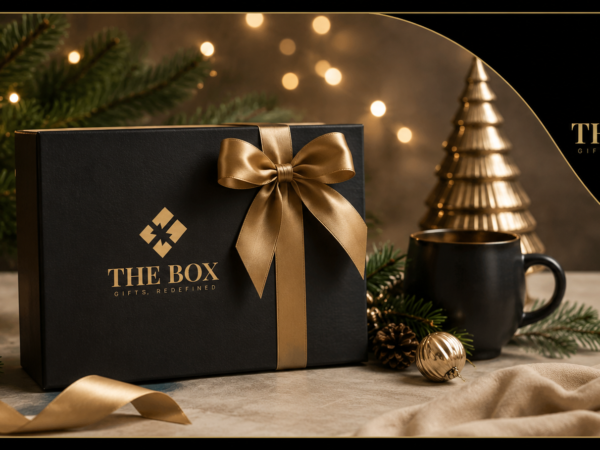
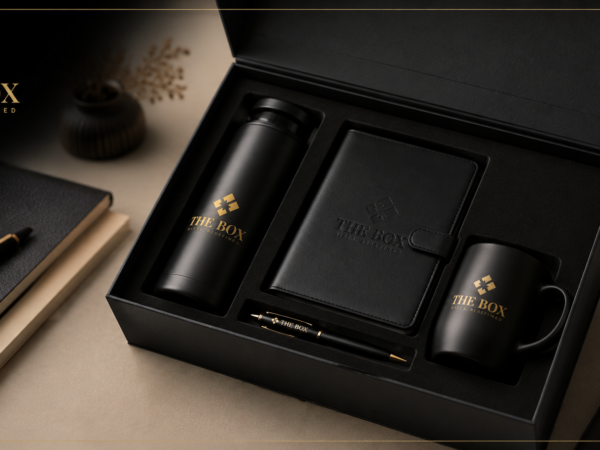
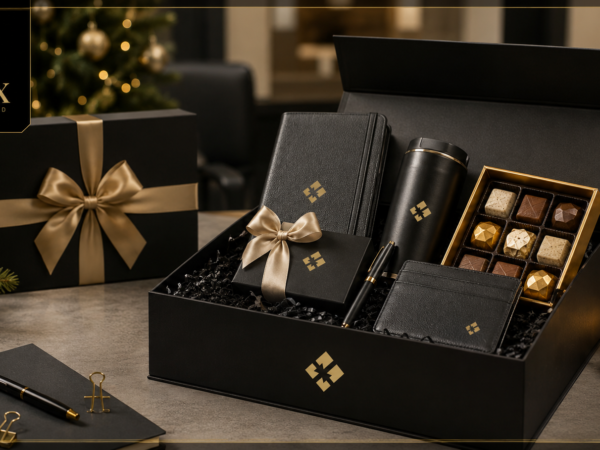
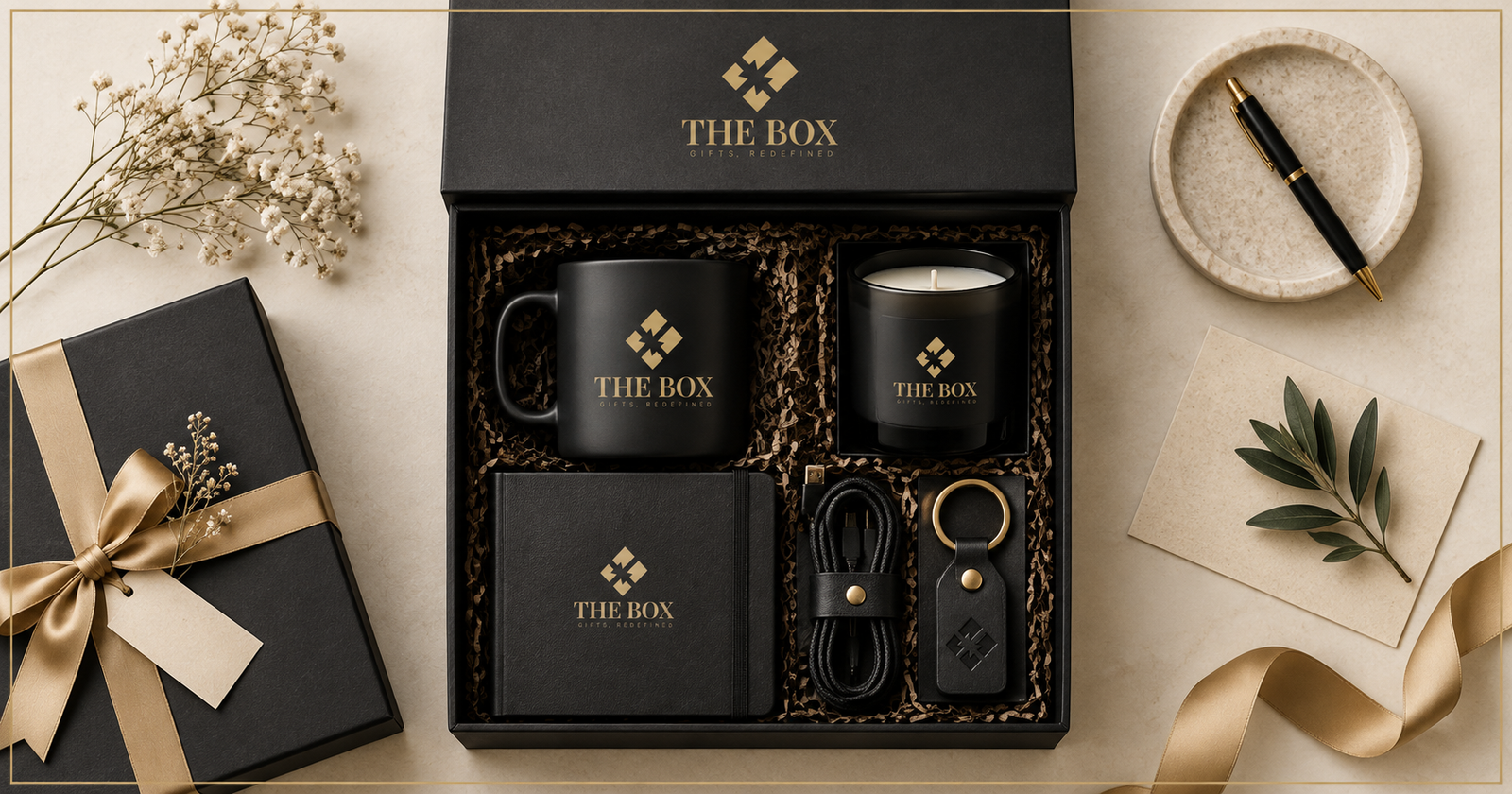
This is also where corporate gift boxes can provide more flexibility than a single branded product.
Instead of asking, “Which item should we put our logo on?”, the company can build a complete concept around the occasion.
For example, an onboarding box can feel different from a client appreciation box even if both use the same brand colours.
That difference is intentional.
Physical Gifting vs Employee Gifting Platform
The easiest way to compare the two is to look at what the project actually requires.
| Requirement | Physical Gifting Partner | Employee Gifting Platform |
|---|---|---|
| Custom gift box | Strong fit | Usually secondary |
| Custom packaging | Strong fit | Depends on provider |
| Branded products | Strong fit | Available with some platforms |
| Employee choice | Limited | Strong fit |
| Recurring rewards | More manual | Strong fit |
| Automated occasions | Limited | Strong fit |
| Executive gifting | Strong fit | Less relevant |
| Ramadan/Eid boxes | Strong fit | Depends on offering |
| Digital rewards | Not the main model | Strong fit |
| Individual employee delivery | Can be managed | Often supported |
| Unboxing experience | Strong fit | Depends on physical offering |
This is why asking which model is “better” is not particularly useful.
Ask which one fits the job.
When a Hybrid Model Makes More Sense
Sometimes the answer is both.
A company could use a digital employee gifting platform for recurring events such as birthdays and anniversaries, then work with a physical gifting partner for major seasonal campaigns.
For example:
Throughout the year:
Automated recognition and employee choice.
Ramadan and Eid:
One coordinated physical campaign.
New hires:
Branded onboarding boxes.
Executive milestones:
Individually curated gifts.
This approach avoids forcing one system to handle completely different types of gifting.
It also gives HR and procurement teams more control over where their time and budget go.
Corporate Gifting for Clients Is a Different Problem
Employee gifting and client gifting can use similar products, but the decision behind them is different.
With employees, the focus may be:
- Recognition.
- Belonging.
- Milestones.
- Choice.
- Fairness.
With clients, it is more likely to be:
- Appreciation.
- Relationship building.
- Partnership milestones.
- Brand experience.
- VIP recognition.
The existing corporate gifts for clients content explores client segmentation, occasion, personalisation, packaging, and fulfilment from a client-focused perspective.
That distinction matters.
A platform designed primarily around employee rewards may not be the right tool for a small number of high-value client relationships.
What Should Be in a Corporate Gifting Brief?
Before approaching top corporate gifting companies, prepare a proper brief.
It should answer:
Who Is Receiving the Gift?
Employees? Clients? Executives? Event guests? Partners?
Why Are You Sending It?
Recognition? Appreciation? Onboarding? Seasonal gifting? A milestone?
How Many Recipients?
Include the expected quantity and any additional units needed.
What Is the Budget?
Set a target per recipient and clarify whether packaging, branding, assembly, and delivery need to fit inside that figure.
Where Are the Gifts Going?
One office is very different from hundreds of individual addresses.
What Does the Brand Require?
Provide:
- Logo files.
- Brand guidelines.
- Colours.
- Messaging requirements.
- Personalisation requirements.
The more complete the brief, the easier it is for a gifting provider to recommend a realistic solution.
Questions to Ask Before Choosing a Gifting Provider
Do not compare quotations based only on the product price.
Ask:
- What is included?
- Is packaging included?
- Is branding included?
- Is personalisation included?
- Is assembly included?
- Is quality control included?
- Is fulfilment included?
- Is delivery included?
- Can I approve a sample?
- What happens if a product becomes unavailable?
- How are incorrect or damaged gifts handled?
- How much notice is needed for custom production?
This is especially important because two quotations can have the same product list and completely different total project costs.
One may include everything.
The other may leave half the work with your internal team.
Common Mistakes When Choosing a Corporate Gifting Model
Choosing a Platform Because It Looks Convenient
A dashboard can simplify administration, but it does not automatically create a memorable physical gift.
Choosing a Supplier Because It Has Thousands of Products
More options can mean more work.
The value is in finding the right options quickly.
Automating Every Occasion
Some occasions deserve a physical and highly considered experience.
Automation is useful where repetition is the problem.
Treating Employee Choice as Mandatory
Choice is useful when preferences vary widely. It is less important when the shared experience is the point.
Spending the Whole Budget on Products
The box, branding, personalisation, assembly, quality control, and delivery all affect the final experience.
Forgetting Fulfilment
A beautiful gift arriving late or with the wrong name is still a failed gifting project.
Corporate Gifting Evaluation Checklist
Before choosing your gifting model:
- Defined the recipient group
- Identified the occasion
- Decided whether the gift needs to be physical
- Set the budget
- Decided whether recipients need a choice
- Identified recurring gifting occasions
- Considered automation requirements
- Defined branding and personalisation
- Confirmed delivery locations
- Prepared accurate recipient information
- Requested clear production timelines
- Confirmed what fulfilment includes
- Asked about samples and approvals
- Confirmed quality-control procedures
- Checked substitution and replacement policies
- Reviewed the full cost, not just the product price