


Putting together a corporate gift sounds straightforward.
You choose a few products, add the company branding, put everything in a box, and send it out.
That works when you’re buying for ten people.
It gets a lot less simple when the list reaches 100, 300, or 1,000 recipients. Suddenly, you’re thinking about whether the products are available in the required quantity, whether the packaging can be produced on time, how names will be handled, where everything will be delivered, and what happens if one of the selected products becomes unavailable.
And somewhere in the middle of all that, there is still a basic question:
Will people actually like the gift?
That’s what makes a good corporate gift kit different from a box of branded merchandise. The products should have a reason for being there. They should work together, suit the people receiving them, and make sense for the occasion.
A new employee might receive a practical welcome kit. A long-term client may get a more polished collection. An executive may need something considerably more selective, while an event attendee may simply need a useful gift that is easy to carry.
The same idea applies to a business gift set. You are not just putting products together because they are available. You are creating a small collection around a purpose.
And then there are corporate gift hampers, which give you more room to play with variety. They can work particularly well for seasonal occasions, gourmet gifting, client appreciation, and employee celebrations.
The best place to start is not a product catalogue.
It is the reason you’re giving the gift.
What Is a Corporate Gift Kit?
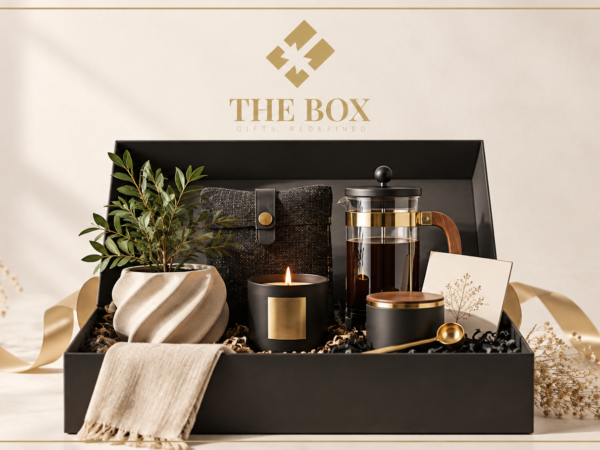
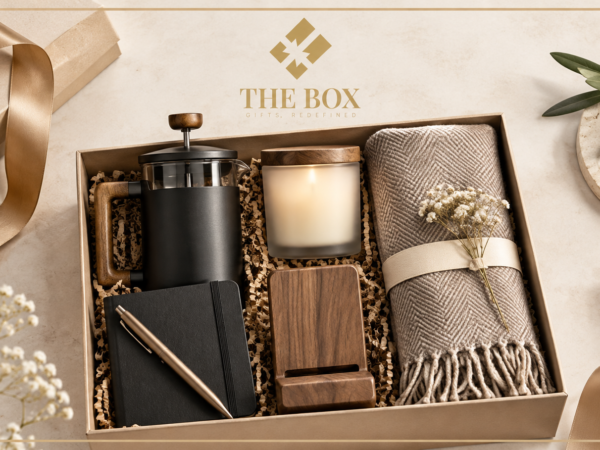
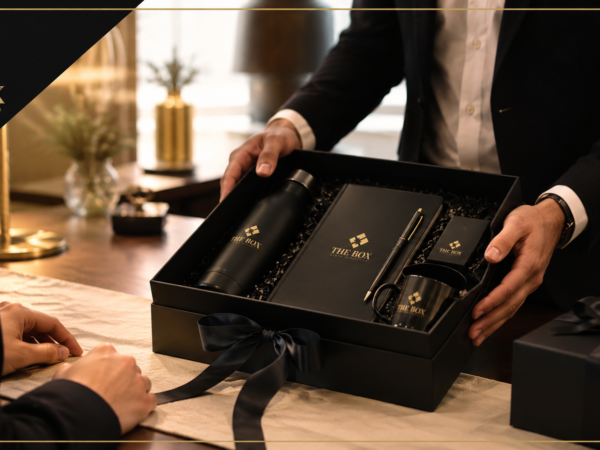
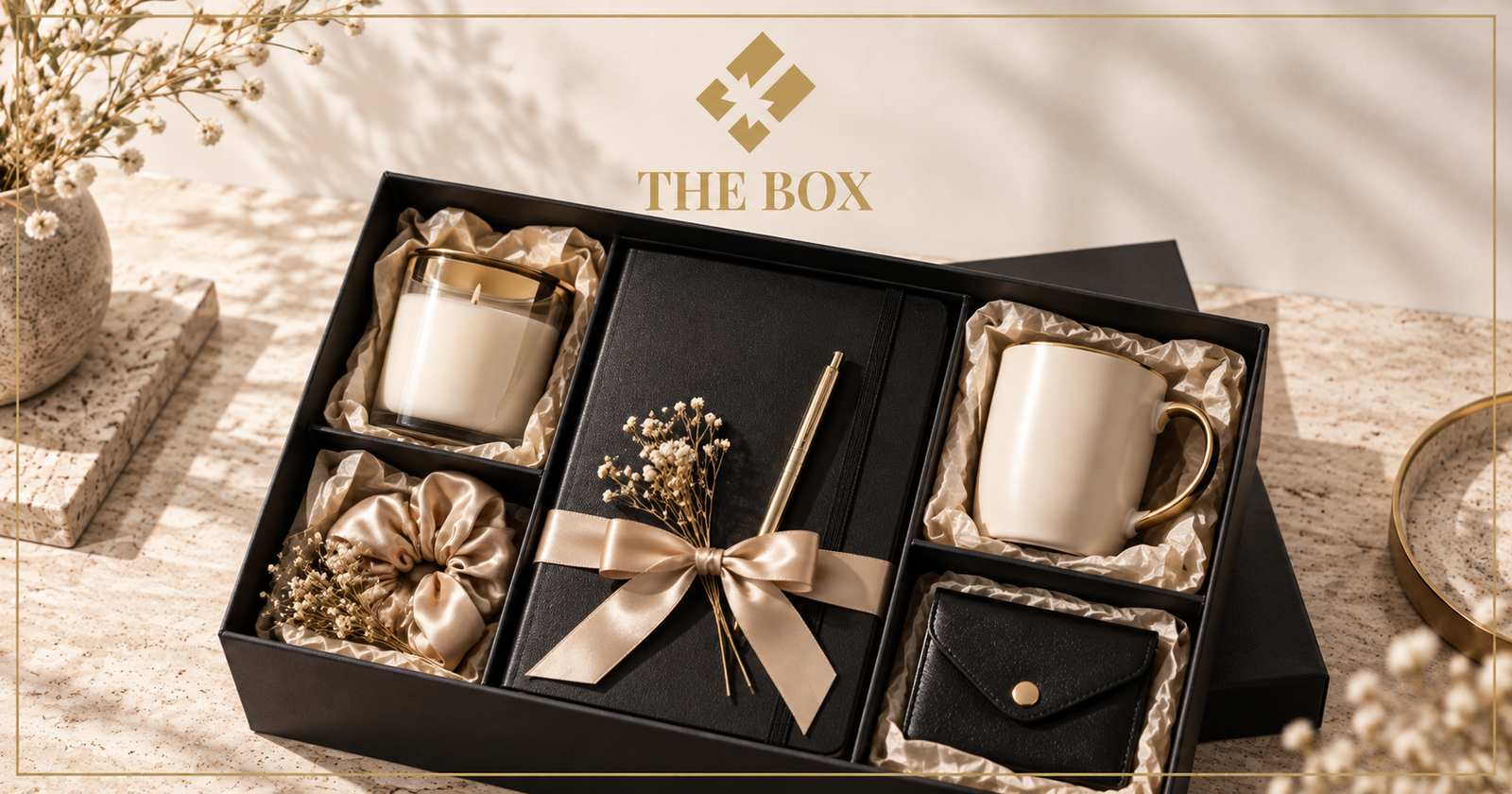
A corporate gift kit is a collection of products prepared around a particular business occasion, audience, or purpose.
There isn’t one standard formula.
A small kit might contain a notebook, a useful desk item, and a card. A larger one could include several products, custom packaging, branded inserts, personalisation, and individual delivery.
What goes inside depends on who will receive it.
For example, an onboarding kit might focus on making a new employee feel welcome. A client kit can lean more towards premium lifestyle products. An event kit usually needs to be lighter, easier to carry, and suitable for a larger number of people.
The products don’t necessarily have to be unusual.
What matters is the connection between them.
A notebook, pen, and drinkware item may sound ordinary on their own. Put them together as a well-designed welcome kit with a thoughtful message and appropriate packaging, and the experience is completely different.
This is also why a corporate gift kit needs to be planned as one project rather than as a list of products.
The Box Concept’s corporate gifting service covers the wider process, including product selection, branding, packaging, kitting, quality control, fulfilment, and delivery.
Why Businesses Use Gift Kits Instead of Individual Gifts
Sometimes one product is exactly what you need.
If a company is giving every conference attendee a branded notebook, there may be no reason to create a complicated box.
But other occasions deserve more.
Imagine recognising employees after a major company milestone. A single branded mug may do the job, but a small collection of useful products with a personal message can make the gesture feel much more deliberate.
There is also a practical benefit.
Once a company approves a particular corporate gift kit, the same concept can be produced consistently across a larger group.
That helps with:
- Budgeting.
- Product sourcing.
- Branding.
- Packaging.
- Assembly.
- Quality control.
- Delivery.
It also gives the campaign a visual identity.
Instead of several unrelated promotional items, the recipient receives something that looks and feels like one gift.
Start With the Recipient, Not the Products
This is where corporate gifting usually goes wrong.
Someone finds a product they like and tries to build a campaign around it.
It is much easier to work in the opposite direction.
Ask a few basic questions first.
Who Is Receiving It?
An employee?
A client?
An executive?
A business partner?
An event attendee?
The answer immediately changes the type of gift that makes sense.
What Is the Occasion?
A welcome gift and a thank-you gift shouldn’t feel identical.
Neither should an Eid gift and an executive milestone gift.
How Many Recipients Are There?
Twenty VIP clients give you very different possibilities from 2,000 employees.
Quantity affects sourcing, personalisation, packaging, and delivery.
What Is the Budget?
Set a realistic budget per recipient before selecting products.
Otherwise, it’s easy to fall in love with an idea that simply isn’t practical at scale.
Where Are the Gifts Going?
Sending 100 boxes to one headquarters is relatively straightforward.
Sending 100 boxes to 100 different addresses requires a much more detailed fulfilment plan.
For employee campaigns, the existing corporate gifts for employees content can also help when deciding how the occasion, recipient, recognition level, and delivery requirements should influence the gift.
Corporate Gift Kit Ideas by Purpose
Once the reason for the gift is clear, product selection becomes much easier.
Employee Onboarding Kit
The first few days at a new company can be overwhelming.
A welcome kit doesn’t need to contain everything an employee might ever need. A few useful items can be enough:
- Notebook.
- Quality pen.
- Drinkware.
- Desk accessory.
- Welcome card.
- Small lifestyle item.
The card is worth keeping in mind here. It gives the company a chance to say something personal instead of letting the logo do all the talking.
Employee Recognition Kit
Recognition gifts should feel different from standard company merchandise.
A useful approach is to combine one or two good-quality products with:
- A personalised message.
- Thoughtful packaging.
- A product the employee can actually use.
The value isn’t necessarily in how expensive the gift looks.
It is in whether the employee understands why they received it.
Client Appreciation Kit
A client gift needs a slightly different treatment.
The relationship comes first.
A business gift set could include:
- Premium desk accessory.
- Lifestyle product.
- Gourmet item.
- Personalised card.
Avoid filling the box simply because there is room.
Three products that work well together can feel much more considered than seven unrelated ones.
Executive Kit
Executives are usually exposed to corporate gifting quite often.
That makes generic gifts easy to forget.
A smaller collection of better-selected products can work well:
- Premium writing instrument.
- Executive notebook.
- Travel accessory.
- Technology organiser.
- Refined keepsake.
Branding can be quieter here. The packaging and product quality can carry more of the experience.
Event Kit
Events are different again.
The gift needs to be practical for a crowd.
Think about:
- Size.
- Weight.
- Distribution.
- Quantity.
- Branding.
- Whether people will actually use the products afterwards.
For more event-specific ideas, corporate event gift ideas can help when planning around audience size, portability, branding, and delivery.
Business Gift Set vs Corporate Gift Kit
The two terms overlap, but they are not always used in exactly the same way.
A business gift set usually refers to a collection of products presented as one professional gift.
A corporate gift kit can go a little further.
It might include the products plus:
- Welcome information.
- Event materials.
- Branded inserts.
- Instructions.
- Personalised messages.
- Other campaign-specific elements.
For example, a client could receive a business gift set containing a notebook, pen, and premium accessory.
A new employee could receive a corporate kit containing similar products alongside a welcome letter and company information.
There is no need to get caught up in the terminology.
The useful question is:
What does the recipient need to experience from this gift?
Business Gift Set Ideas That Do Not Feel Generic
A business gift set doesn’t have to look like office stationery packed into a box.
Start with a theme.
The Workday Set
A straightforward option:
- Good notebook.
- Pen.
- Desk accessory.
- Coffee or drinkware item.
Nothing revolutionary.
But if the products are good and the presentation is clean, it works.
The Travel Set
For a client or executive who spends a lot of time travelling:
- Travel organiser.
- Portable charging accessory.
- Reusable bottle.
- Luggage accessory.
The set feels more personal because it connects to something the recipient actually does.
The Technology Set
This could include:
- Charging accessory.
- Cable organiser.
- Technology pouch.
- Portable device.
Technology gifting needs one extra check: compatibility.
A product can look perfect on paper and still be useless if it doesn’t work with the recipient’s devices.
The Local Business Set
For international clients or visiting partners, locally inspired products can give the gift a stronger connection to Egypt.
The challenge is keeping it professional.
You want something that feels like a well-designed business gift, not a collection of souvenirs picked up at the airport.
Corporate Gift Hampers: When Variety Works Better
A corporate gift hamper gives you more freedom to include several products.
That makes it a natural choice for:
- Seasonal gifting.
- Client appreciation.
- Employee celebrations.
- Gourmet campaigns.
- Hospitality.
- Thank-you gifts.
Food and beverage products are common, but a hamper doesn’t have to be entirely edible.
You can build one around a mood or occasion.
Gourmet Hamper
For example:
- Coffee.
- Tea.
- Cookies.
- Chocolate.
- Nuts or other suitable products.
Celebration Hamper
A more occasion-led version could combine:
- Gourmet products.
- A small keepsake.
- Personalized card.
- Seasonal packaging.
Lifestyle Hamper
This could bring together:
- Beverage products.
- Journal.
- Lifestyle accessory.
- Relaxation product.
The trick is knowing when to stop.
If the recipient has to dig through twelve products to find the one item they actually like, the hamper has probably become too busy.
Corporate Gift Hampers vs Gift Boxes
The two formats create slightly different experiences.
| Corporate Gift Hamper | Corporate Gift Box | |
|---|---|---|
| Overall feel | Generous and varied | Curated and structured |
| Product variety | Usually higher | More controlled |
| Seasonal gifting | Strong fit | Strong fit |
| Gourmet gifting | Strong fit | Can work |
| Executive gifting | Depends on contents | Often a better fit |
| Employee celebrations | Strong fit | Strong fit |
| Unboxing | Important | Often central |
| Personalization | Flexible | Highly flexible |
Neither format wins every time.
A premium client may appreciate a beautifully curated box more than a large hamper.
A festive employee campaign may benefit from the variety of a hamper.
Choose the format that suits the occasion rather than forcing every campaign into the same packaging.
How Many Products Should a Corporate Gift Kit Have?
There is no magic number.
A simple way to think about it is by budget and audience.
Entry-Level Kit
1–2 products
Useful for:
- Large employee groups.
- Events.
- High-volume campaigns.
Mid-Range Kit
2–4 products
Suitable for:
- Employee recognition.
- Client appreciation.
- Business partners.
Premium Kit
3–5 carefully selected products
A good fit for:
- Executives.
- VIP clients.
- Strategic partners.
High-End Kit
Here, the number of products may actually decrease.
You might have only two or three premium products, but invest more in:
- Product quality.
- Packaging.
- Personalisation.
- Presentation.
A full box is not necessarily a valuable box.
Packaging Is Part of the Gift
The packaging is the first physical thing the recipient interacts with.
That makes it part of the experience, not just protection for the products.
Depending on the campaign, options can include:
- Rigid boxes.
- Magnetic boxes.
- Drawer boxes.
- Sleeves.
- Branded tissue.
- Custom inserts.
- Ribbons.
- Message cards.
For a premium campaign, the existing luxury gift packaging content can provide more direction around using packaging to create a stronger presentation.
Let the Packaging Match the Contents
A small collection in an oversized box can feel underwhelming.
A crowded box can feel cheap even when the products themselves are good.
The box should give each item enough room while keeping everything secure during handling and delivery.
Branding a Corporate Gift Kit Without Making It Look Like Merchandise
This is where restraint helps.
A company logo can be present without appearing on every single item.
Brand identity can come through:
- Box design.
- Company colors.
- Card.
- Insert.
- Ribbon.
- Sleeve.
- One branded product.
- Subtle engraving.
For a premium gift, keeping the products relatively clean can actually make the brand feel more sophisticated.
The brand integration service provides different ways to incorporate the company’s identity across packaging, cards, inserts, ribbons, sleeves, and selected products.
The best branding approach depends on the audience.
An event giveaway can carry stronger branding.
A VIP client gift may benefit from something much quieter.
Personalization: Small Details Can Do a Lot
Personalisation doesn’t have to mean putting someone’s name on everything.
Sometimes one handwritten-style message or a well-written card does more.
Depending on the campaign, you could personalize:
- Card.
- Insert.
- Packaging label.
- Initials.
- Milestone message.
- Client-specific note.
For large campaigns, personalizing the card can be much more practical than personalizing every product.
Whatever approach you choose, check the data carefully before production.
Names, addresses, quantities, and messages should all be verified.
A beautiful gift with the wrong name is still a mistake.
Corporate Gift Kit Budget: Where Should the Money Go?
Products are only one part of the budget.
You may also need to account for:
- Packaging.
- Branding.
- Personalisation.
- Assembly.
- Quality control.
- Storage.
- Delivery.
This is why two quotes can look similar at first and end up with very different totals.
One supplier may include assembly and delivery.
Another may charge for them separately.
Ask for the complete cost before approving the project.
Then decide where the budget will have the biggest impact.
If the product is the main attraction, invest there.
If the unboxing experience matters more, packaging deserves attention.
If you’re sending hundreds of individual gifts, fulfilment and delivery need to be part of the calculation from the beginning.
Corporate Gift Kits for Large Orders
A kit that works beautifully for 20 people can become surprisingly difficult at 1,000 units.
At that scale, you need to think about:
- Product availability.
- Quantity.
- Lead times.
- Personalisation data.
- Assembly.
- Quality control.
- Storage.
- Delivery.
A product that looks perfect during the initial presentation is not necessarily the best choice if the supplier cannot source the required quantity.
The Box Concept states that its production capacity can scale from 50 to 5,000 units, with kitting, packing, warehousing, and delivery included in its operational capabilities.
For large campaigns, that operational side deserves as much attention as the creative concept.
Corporate Gift Hampers for Seasonal Campaigns
Seasonal campaigns have a habit of becoming urgent very quickly.
Ramadan, Eid, Christmas, New Year, and year-end gifting all create periods when companies are ordering around the same time.
Planning early gives you more room to choose.
For a seasonal hamper, consider:
- What makes it relevant to the occasion?
- Which products are essential?
- How much branding is appropriate?
- Does the packaging need a seasonal treatment?
- When do the gifts need to arrive?
A good seasonal gift should acknowledge the occasion without becoming so heavily themed that the products become useless afterwards.
Corporate Gift Kits for Different Recipient Levels
You don’t always need one gift for everyone.
A tiered approach can make more sense.
| Recipient | Gift Direction | Branding |
|---|---|---|
| Employees | Useful curated kit | Moderate |
| Managers | Premium business set | Subtle |
| Clients | Lifestyle/business collection | Subtle |
| VIP clients | Premium curated kit | Minimal |
| Executives | Refined business set | Minimal |
| Event guests | Practical compact kit | More visible |
| Strategic partners | Personalised premium set | Controlled |
The products can change while the overall brand identity remains consistent.
For broader B2B gifting, B2B gifting offers another useful perspective on matching the gift to the recipient, relationship, occasion, and purpose.
Corporate Gift Kit vs Promotional Giveaway
These are easy to mix up.
A promotional giveaway is generally designed for:
- Large quantities.
- Broad distribution.
- Brand visibility.
- Events.
- Lower cost per recipient.
A corporate gift kit is usually more deliberate.
It may be created for a particular group, occasion, or relationship.
It can include:
- Better-quality products.
- Custom packaging.
- Personalisation.
- A specific message.
- A more considered product combination.
The same product can even belong to either category.
A branded pen handed to everyone at a conference is a giveaway.
The same pen included in a carefully selected executive set is part of a corporate gift.
The context changes how the product is perceived.
Common Mistakes When Creating Corporate Gift Kits
Choosing Products Before Defining the Audience
A product should answer a need or support the occasion.
Adding Products Just to Fill the Box
If you can’t explain why an item is there, it probably doesn’t need to be there.
Overbranding
Too much branding can make a premium gift feel like promotional merchandise.
Ignoring Packaging
The recipient sees the packaging before the products.
Personalising Without Checking the Data
Names and addresses need to be verified before production.
Forgetting Fulfilment
Someone still needs to assemble, check, organise, and deliver the gifts.
Ordering Too Late
Custom packaging and production need time.
Treating Every Recipient the Same
Employees, clients, executives, and event attendees may need different approaches.
Corporate Gift Kit Approval Checklist
Before approving the final concept:
- Defined the recipient group
- Identified the occasion
- Defined the purpose of the gift
- Set the budget per recipient
- Selected products around one clear concept
- Checked product availability
- Decided the appropriate number of products
- Chose branding methods
- Approved packaging
- Decided the level of personalisation
- Verified recipient information
- Approved a mockup or physical sample
- Confirmed production timeline
- Planned quality control
- Confirmed assembly and fulfilment
- Confirmed delivery locations
- Added a realistic delivery buffer
Bottom Line
A corporate gift kit doesn’t need to be extravagant to make an impression. What matters is that the products feel relevant to the person receiving them and appropriate for the occasion.
A business gift set can be a simple way to bring a few useful products together for a client, partner, or executive. For seasonal occasions, corporate gift hampers offer more room for variety while still giving the company an opportunity to create a consistent presentation.
There is also more to corporate gifting than choosing the products. Packaging, branding, personalisation, fulfilment, and delivery all play a part in how the gift is experienced.
For companies planning a larger campaign, choosing a provider that can manage these details from concept to delivery can make the process considerably easier. The right approach is not necessarily the biggest or most expensive one. It is the one that fits the recipients, the occasion, and the message you want the gift to carry.
If you are planning a corporate gifting campaign, explore corporate gifting to see how the different parts of the process can come together.
The best corporate gift is rarely the one with the most products.
It is the one where the recipient opens the box and understands why everything inside was chosen.