



Let’s be honest. Most people don’t need another branded pen.
They probably have three already sitting in a desk drawer. There may also be an old keychain, a notebook they never opened, and a promotional mug that somehow made its way into the kitchen.
That’s the problem with corporate giveaways. Getting something into someone’s hands is easy. Giving them something they genuinely want to keep is a different challenge.
This doesn’t mean every giveaway has to be expensive or unusual.
Quite often, the best ideas are surprisingly ordinary. A good bottle, a useful phone stand, a decent notebook, or a well-made tote bag can have far more staying power than a novelty product that gets attention for five minutes.
What changes the result is how thoughtfully the item is chosen.
Who is receiving it? Where will they use it? Is the product connected to the event? Does it fit the brand? And, perhaps most importantly, would they still want it if the logo wasn’t printed on it?
That last question is worth asking before ordering anything.
For businesses planning creative corporate giveaways, the objective should not simply be to find something different. It should be to find something that feels relevant.
A giveaway at an exhibition has a different job from a thank-you gift sent to a long-standing client. An item handed to 2,000 visitors needs to be practical and easy to distribute. A gift given to 20 important partners can be much more personal.
Once you make that distinction, choosing the right product becomes much easier.
What Makes a Corporate Giveaway Worth Keeping?
Think about the last promotional item you actually used.
There is a good chance it solved a small problem.
Maybe it was a bottle you took to work. Maybe it was a charging cable that ended up permanently in your laptop bag. Maybe it was a tote bag that became your grocery bag.
That’s the sweet spot.
A useful giveaway quietly becomes part of someone’s routine.
For a company, that’s valuable because the branding stays visible without constantly asking for attention.
When choosing corporate giveaways, look at four things first:
Usefulness. Will the recipient use it?
Quality. Will it survive more than a few uses?
Relevance. Does it make sense for this audience?
Portability. Can someone actually carry it home from the event?
These questions are more useful than simply asking which products are trending.
A premium-looking product that nobody needs can still end up in the bin.
Corporate Giveaways vs Corporate Gifts
The terms sound similar, but the purpose is usually different.
A giveaway is normally designed for wider distribution.
Think about:
- Trade shows.
- Conferences.
- Exhibitions.
- Product launches.
- Brand activations.
- Large company events.
The business may need hundreds or thousands of items, so cost, availability, practicality, and distribution matter.
A corporate gift is more targeted.
It may be given to:
- A client.
- An executive.
- A business partner.
- An employee.
- A VIP guest.
Here, the relationship and occasion become much more important.
For example, giving 500 visitors the same branded notebook at an exhibition makes sense.
Sending that exact notebook alone to your most important client may feel rather impersonal.
For more relationship-focused campaigns, unique corporate gifts can offer a different approach, with more room for curation, personalisation, and presentation.
The product is only one part of the decision.
The context matters just as much.
Start With the People Receiving the Giveaway
One of the easiest ways to choose the wrong giveaway is to start browsing a supplier’s catalogue.
There may be hundreds of products, and suddenly everything looks like a possibility.
Start somewhere else.
Think about the audience.
General Event Visitors
For a large crowd, keep things simple.
You want something:
- Useful.
- Lightweight.
- Affordable.
- Easy to distribute.
Pens, notebooks, bottles, tote bags, and small technology accessories can all work.
Qualified Prospects
Someone who has spent ten minutes talking to your sales team is not quite the same as someone who picked up a flyer while walking past.
You can use a better-quality product here.
For example:
- Premium stationery.
- A useful tech accessory.
- Better drinkware.
- A small curated set.
This also gives the sales team a natural reason to continue the conversation.
Employees
The product should reflect the occasion.
A new-hire welcome gift should feel welcoming.
A five-year anniversary gift should feel more considered.
A team-event giveaway can be more relaxed.
There is plenty of room for corporate gifts for employees to go beyond standard merchandise when the gift is tied to recognition, onboarding, milestones, or appreciation.
Clients
Client gifting requires a little more judgement.
The product should feel like appreciation, not advertising.
A useful product with subtle branding will often feel more appropriate than something covered from top to bottom with a company logo.
Creative Corporate Giveaways That People Can Actually Use
Creativity doesn’t have to mean “something nobody has seen before.”
Sometimes it’s simply choosing a familiar product better.
Technology Accessories
Technology products work well because they fit naturally into modern routines.
Consider:
- Phone stands.
- Cable organizers.
- Charging cables.
- USB hubs.
- Webcam covers.
- Tech pouches.
- Compact charging accessories.
The quality matters here more than ever.
Nobody wants a charging cable that stops working after a week.
If you are ordering technology products in bulk, test samples and check compatibility before approving the final quantity.
Reusable Bottles and Drinkware
Drinkware is popular for a simple reason: people use it.
A bottle can travel to:
home → office → car → gym
without much thought.
For a large event, a simple reusable bottle can work well.
For a smaller client or employee campaign, you might choose a better-quality insulated tumbler or travel mug.
The branding doesn’t have to be huge.
A small logo or engraved mark can often look cleaner and give the product a longer life.
Better Notebooks and Stationery
There’s nothing wrong with giving a notebook.
The difference is whether you choose one that someone actually wants to write in.
Think about:
- Paper quality.
- Cover.
- Size.
- Binding.
- Layout.
- Pen compatibility.
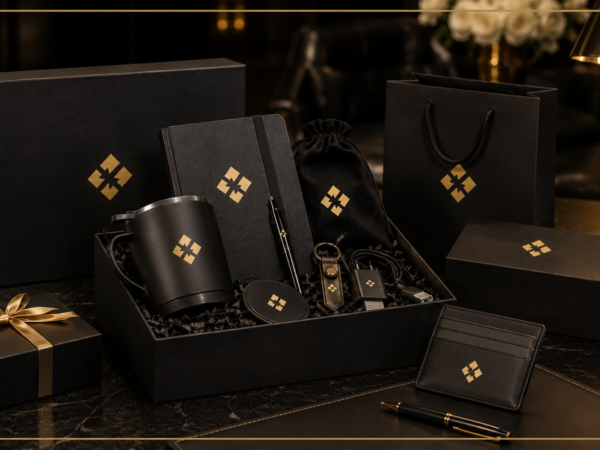
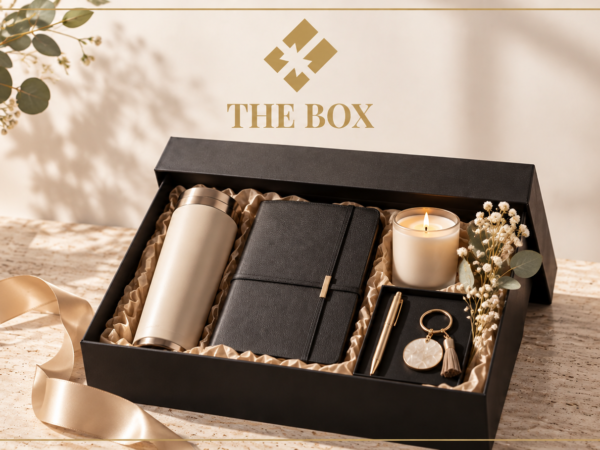
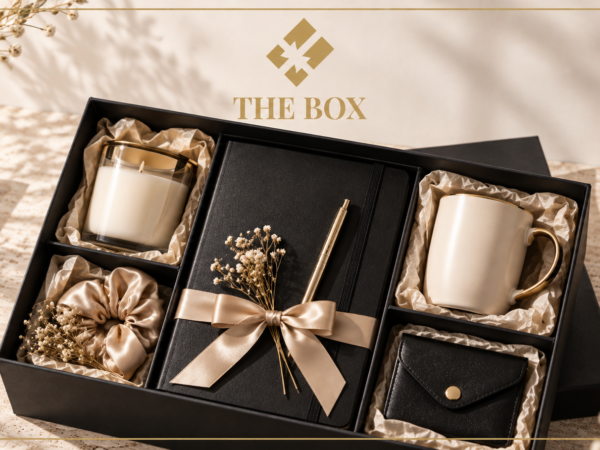
A notebook can also become part of a small set.
Add a good pen and perhaps a desk accessory, and you have a coherent gift rather than three random promotional products.
For more customised projects, custom corporate gifts can be built around the company’s audience, brand identity, packaging, and intended occasion.
Bags and Travel Accessories
A good bag has an advantage that many promotional products don’t:
People can use it outside the event.
Tote bags are particularly useful at exhibitions because attendees need somewhere to put everything else they collect.
For a more premium audience, consider:
- Laptop bags.
- Backpacks.
- Travel organisers.
- Tech pouches.
- Luggage accessories.
The product should match the audience.
A simple tote might be perfect for a conference.
It probably isn’t the right choice for a VIP executive gift.
Sustainable Corporate Giveaways
Sustainability is becoming more relevant to corporate gifting, but simply putting “eco-friendly” on the product description doesn’t make it sustainable.
Look at how the product will actually be used.
A reusable bottle can replace disposable bottles.
A durable tote can replace single-use bags.
A refillable notebook can reduce unnecessary waste.
The lifespan matters too.
If an “eco-friendly” product breaks after two weeks, the environmental benefit becomes questionable.
So instead of asking whether a product sounds sustainable, ask:
Will this product replace something disposable or become something the recipient uses repeatedly?
That is a much more useful measure.
Creative Corporate Giveaway Ideas for Exhibitions
Exhibitions are particularly difficult because attendees can receive dozens of promotional items in a single day.
Your giveaway needs to earn its place in their bag.
A few things help.
Make It Useful Immediately
A tote bag is a good example because visitors can use it while they’re still at the exhibition.
Keep It Easy to Carry
Nobody wants to spend the entire day carrying an awkward promotional item.
Make the Brand Recognisable
Your branding should be clear enough to identify the company without making the product look like an advertisement.
Consider Different Gifting Levels
You don’t have to give the same item to everyone.
General visitors could receive a practical giveaway, while qualified prospects receive something more valuable after a meaningful conversation.
For event campaigns, corporate event gift ideas can help when thinking through quantity, audience, portability, branding, and distribution.
Corporate Giveaway Ideas for Conferences
Conference attendees are usually there for several hours, which changes what makes a giveaway useful.
They may be:
- Taking notes.
- Carrying laptops.
- Moving between sessions.
- Networking.
- Travelling home afterwards.
That makes practical products particularly relevant.
Consider:
- Notebook and pen sets.
- Reusable bottles.
- Laptop accessories.
- Phone stands.
- Compact organizers.
- Travel accessories.
A small kit can work particularly well here.
Instead of handing out five separate promotional items, put two or three useful products together.
The result feels more intentional and is easier to carry.
Corporate Giveaway Ideas for Product Launches
A product launch gives you a chance to make the giveaway part of the campaign rather than an unrelated freebie.
For a technology company, you might choose a useful tech accessory.
For a wellness brand, drinkware or lifestyle products could make more sense.
For a hospitality business, travel or lifestyle products may fit the brand naturally.
The giveaway doesn’t have to copy the product being launched.
It just needs to belong to the same story.
That’s often where the more memorable ideas come from.
Corporate Giveaways for Employees
Employee giveaways can easily become repetitive.
A company orders the same mug every year, changes the colour, and calls it a new gift.
There is a better way.
Start with the reason.
New Employees
A simple welcome kit could include:
- Notebook.
- Bottle.
- Desk accessory.
- Welcome card.
The card can make the difference because it gives the company a chance to actually welcome the person rather than simply giving them branded merchandise.
Team Milestones
If a team has completed a major project, the giveaway can acknowledge the achievement.
It doesn’t need to be expensive.
The story behind the gift matters.
Employee Recognition
A higher-quality product combined with a personal message can feel much more meaningful than another generic branded item.
For more ideas around recognition, employee recognition gifts focus on matching gifts with achievements and employee milestones.
Promotional Gift Products: When Are They the Better Choice?
Promotional gift products are particularly useful when the main objective is visibility.
They make sense when you need:
- Large quantities.
- Broad distribution.
- Consistent branding.
- Easy event distribution.
- Controlled cost per item.
Common choices include:
- Pens.
- Bags.
- Bottles.
- Notebooks.
- Mugs.
- Keychains.
- Phone accessories.
- Desk products.
The important distinction is between inexpensive and disposable.
A lower-cost product can still be genuinely useful.
A product that nobody wants is expensive even if it costs very little.
How Much Branding Should a Giveaway Have?
This is one of the easiest places to overdo things.
If the logo covers the entire product, the recipient may see it as advertising rather than something they want to use.
For an exhibition, more visible branding can make sense.
For a client or executive, you may want something much more subtle.
Depending on the product, you can use:
- Logo printing.
- Engraving.
- Embossing.
- Debossing.
- Branded packaging.
- Sleeves.
- Inserts.
- Cards.
The brand integration approach can help companies think beyond simply printing a logo and consider how the brand can appear across the complete presentation.
When Does Packaging Matter?
Not every giveaway needs a box.
If you’re handing out thousands of pens, elaborate packaging would probably create unnecessary cost.
But packaging becomes more valuable when:
- The product is premium.
- The recipient is important.
- The occasion is significant.
- The gift is delivered individually.
- The presentation is part of the experience.
For premium campaigns, luxury gift packaging can add another layer to the presentation.
The packaging still needs to be practical.
A huge box around a tiny product may look impressive for five seconds, but it isn’t necessarily a good use of the budget.
Can Corporate Giveaways Help Generate Leads?
They can, but only when the giveaway is connected to the campaign.
Instead of giving everyone the same premium item, you could reserve it for people who:
- Complete a product demonstration.
- Book a consultation.
- Scan a QR code.
- Enter a competition.
- Speak with the sales team.
This creates a natural exchange.
The product becomes part of the interaction instead of simply being handed over.
It can also help control costs.
You don’t need to spend the same amount on someone who walked past your booth as you do on a qualified prospect who spent time discussing your service.
How Much Should You Spend on Corporate Giveaways?
There isn’t one number that works for every campaign.
Your budget depends on:
- Number of recipients.
- Product type.
- Product quality.
- Branding.
- Packaging.
- Personalisation.
- Delivery.
- Event type.
A campaign for 2,000 exhibition visitors needs a very different budget from 30 premium client gifts.
Instead of asking for the cheapest product available, decide on the lowest price at which the product still feels useful and well made.
That usually leads to better decisions.
One Giveaway for Everyone? You Don’t Have To
Tiered gifting can make a campaign much more practical.
Imagine an exhibition with hundreds of visitors.
You could have:
General visitors:
A useful, lower-cost giveaway.
Qualified prospects:
A better-quality item after a meaningful conversation.
VIP clients:
A carefully selected corporate gift.
The branding can stay consistent across all three.
The difference is in:
- Product quality.
- Personalization.
- Packaging.
- Presentation.
This allows the company to control spending while still recognizing different levels of engagement.
Common Mistakes With Corporate Giveaways
- Choosing the Cheapest Product
Low cost doesn’t automatically mean good value.
- Picking Something Nobody Needs
Novelty can get attention, but usefulness gives the product a longer life.
- Putting the Logo Everywhere
Good branding should make the product recognizable without ruining its appearance.
- Ignoring Portability
Especially at exhibitions and conferences, people need to carry the giveaway.
- Skipping Samples
A product image cannot tell you everything about material, size, finish, or quality.
- Giving Everyone the Same Product
Different audiences may justify different levels of gifting.
- Ordering at the Last Minute
Sourcing, branding, packaging, production, and quality checks all take time.
- Forgetting Distribution
Someone still needs to know who receives what and when.
Corporate Giveaway Planning Checklist
Before placing the order, confirm:
- Target audience
- Purpose of the giveaway
- Number of recipients
- Budget per recipient
- Product selection
- Product availability
- Branding method
- Packaging requirements
- Personalization requirements
- Sample approval
- Production deadline
- Quality-control process
- Delivery plan
- Distribution method
- Follow-up plan if the giveaway is part of lead generation
For larger campaigns, having these details ready makes it much easier to brief a supplier and avoid last-minute changes
Conclusion
A good corporate giveaway doesn’t need to be expensive, complicated, or particularly unusual.
It just needs to have a reason to be kept.
That might mean choosing a bottle someone carries to work every day, a phone accessory that solves a small problem, or a notebook that is genuinely pleasant to use. At an exhibition, it could simply be a bag that gives visitors somewhere to put everything else they’ve collected.
The biggest difference usually comes before the logo is added.
Choose for the audience first. Think about the occasion. Consider how the product will be used after the event. Then decide how much branding and packaging the campaign actually needs.
For larger campaigns, corporate gifting solutions can bring product selection, branding, packaging, kitting, quality control, and delivery into one coordinated process.
Because ultimately, the strongest giveaway isn’t the one people notice for a few seconds.
It’s the one they keep using after they’ve forgotten where they got it.